Snow Knows No Borders™️: A Look at What It Takes to Excel in the World of Alpine Ski Racing
Despite the flashy videos filmed primarily by Daniel Fatzinger’s father and posted to Instagram and Facebook, alpine ski racing is built on a lot of hard work. Not on social media posts or dramatics, but on quiet learning, repetition, long hours on snow, and even longer hours in vans and trains. The environment changes from piste to piste, but the expectations stay the same: show up rested and prepared, deliver focus and respect to the mountain and the course, and adjust when the conditions ask for something different.
This simple idea sits at the center of Daniel’s development: Snow Knows No Borders™.
The snow does not reward background or nationality. It rewards clarity and consistency. Daniel has learned that across the places he has trained. In Colorado, he shaped his balance. In Minnesota, he sharpened his fundamentals. Now in Austria, the demands have exponentially increased, demanding precision, timing, and the ability to learn quickly - in a non-native language. The borders between those places are geographic. But the commitment…the real work…is universal.
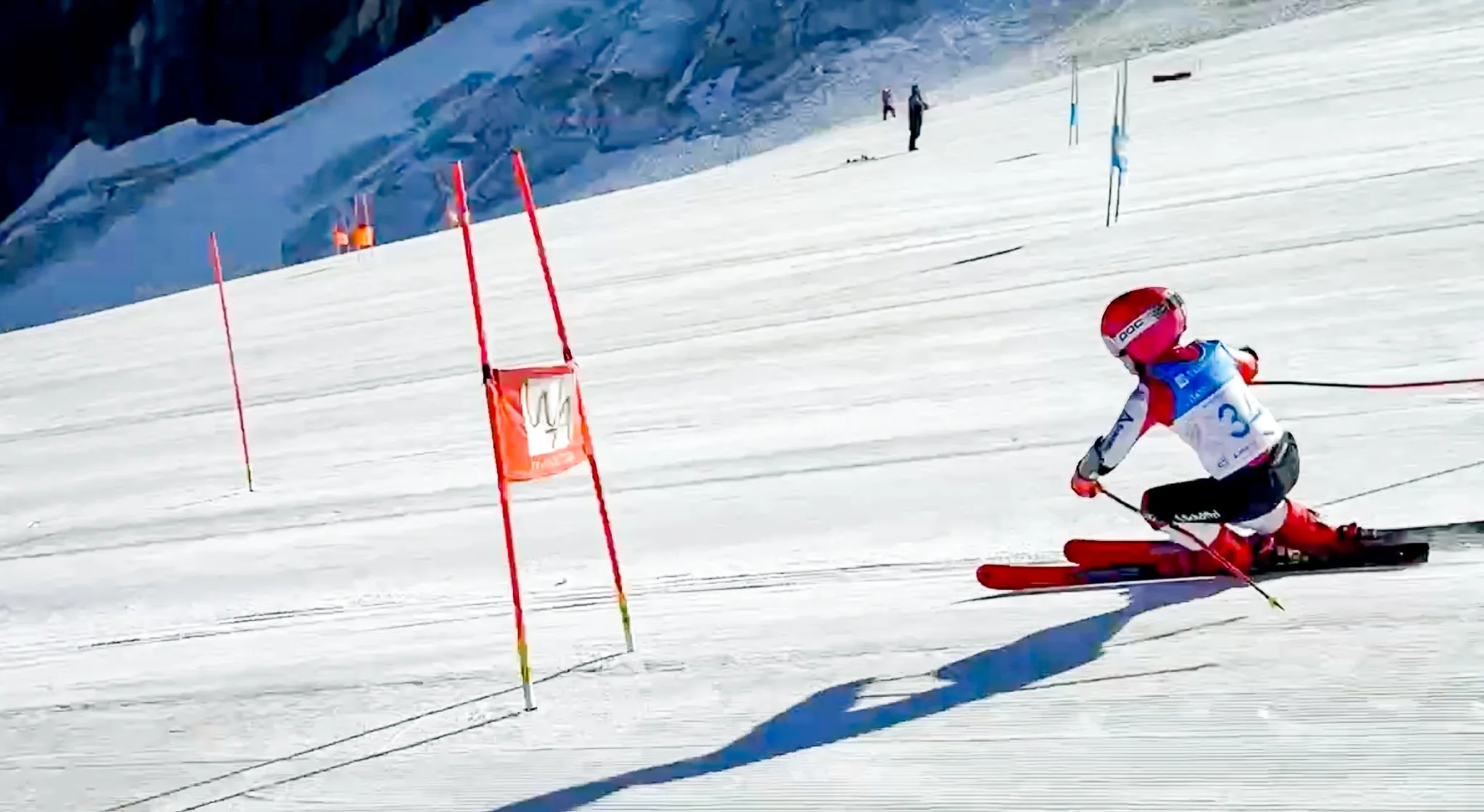
Daniel Fatzinger - Giant Slalom training - Zermatt, Switzerland - August 2025
The Structure Behind a Ski Racing Season
From the outside, youth alpine ski racing looks like playful weekends in the mountains and a couple dozen race days early in the year. Inside the sport, the structure is much deeper, and much more intense.
For elite training in Europe, training blocks begin in August, usually in Zermatt, Switzerland (or New Zealand or Chile). On snow training continues until the last snow melts in late April, early May. A single winter includes two to three days per week in SL and GS training sessions, glacier camps, equipment maintenance, strength training, and travel to race venues across multiple regions.
These commitments shape an athlete, but they also reflect the realities of the sport. This sport is time intensive. It requires access to snow, often before the crews who work at the mountain arrive for work. And it carries substantial financial weight on clubs, athletes, and their families.
The Wall Street Journal reported that the total cost of a junior athlete’s racing career can exceed $500,000 - a number that aligns with what families, coaches, and clubs already understand. The expenses accumulate in familiar ways: eight or more pairs of skis that must be replaced each season as an athlete grows, boots that need to fit precisely each year, race fees, travel to training and competitions, and ongoing coaching in an increasingly technical sport.
Austria’s system is structured and efficient, but the fundamentals remain the same. Any young racer moving toward the higher levels of the sport needs stability, guidance, and lots of support.
Why Support Matters
Support - both financial and non-financial - plays a simple, practical role in a junior athlete’s development. It keeps them on the snow when the season stretches long. It provides access to the equipment and tuning required for safe and precise skiing. It helps with the travel needed to reach race fields. And it gives the athlete the encouragement to treat the work with seriousness, patience, and intent.
Sponsors, partners, and supporters become a key part of the athlete’s ecosystem. They help sustain the training that builds technical clarity. They allow young racers to focus on development without the constant pressure of logistics. And they become an extension of the values that matter most in the sport: discipline, respect, and consistent improvement.
For supporters, there is also something meaningful in the connection. Alpine skiing is a long game. Growth happens over years. Being part of that progression, whether through following Daniel’s updates, supporting his partners, attending events, or wearing his merchandise. All of this creates a genuine stake in his future. And Daniel notices.
It is not performative. It is participation in something real.
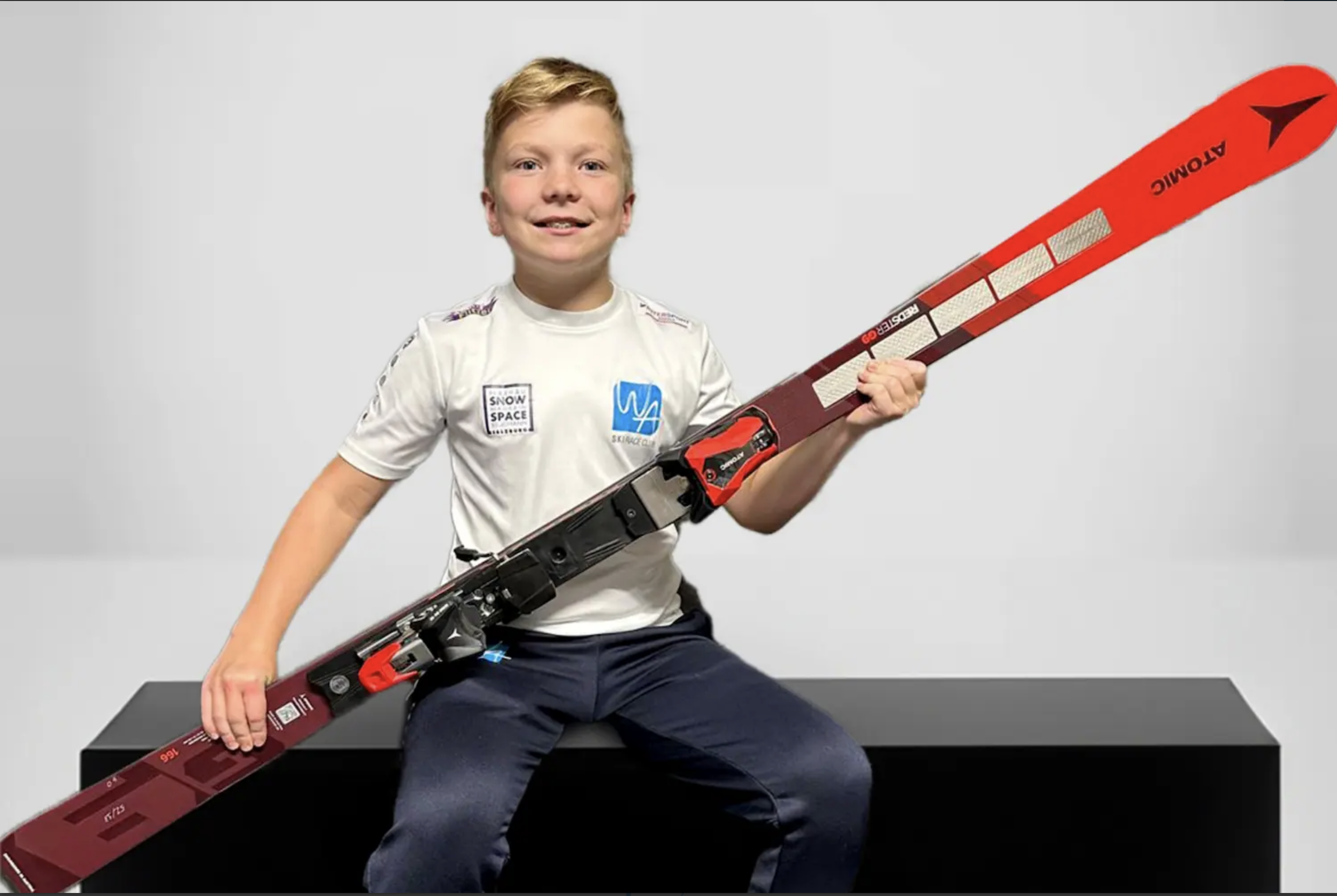
Daniel Fatzinger and his ski, binding and helmet partner, Atomic.
A Cross-Border Perspective
Daniel has met athletes and coaches who helped define modern alpine ski racing. Experiences with Mikaela Shiffrin and Lindsey Vonn showed him early examples of professionalism. Conversations with Lucas Braathen, Marco Odermatt, Daron Rahlves, and Sofia Goggia offered insight into how different athletes prepare and how they manage risk, recovery, and race-day focus.
What stands out is not the star power. It is the consistency.
Regardless of country, discipline, or personality, the strongest athletes share similar values: respect for the snow, belief in fundamentals, and a willingness to adapt faster than the people around them.
Those lessons apply anywhere. They cross borders easily.
And they reinforce why Daniel’s path, spanning the U.S. and Austria, gives him a broader understanding of the sport.
Looking Forward
Daniel is building toward the long-term goal of entering FIS competition by sixteen. That requires time on snow, technical stability, and steady physical development. The work moves in small increments: better balance through the top of the turn, more consistent edge placement, improved reaction to surface changes, and a deeper understanding of line and terrain.
Progress is not measured in dramatic leaps. It shows up in cleaner runs, steadier movement, and a more mature response to the mountain.
The idea behind Snow Knows No Borders™ remains clear. The snow does not recognize where an athlete comes from. It recognizes how they show up to the sport, every day, for ten months of the year.
And with the continued support of families, coaches, partners, and fans, Daniel will keep learning what the mountain asks of him. One session, one race, and one season at a time.
Daniel’s path is built on work, consistency, and the people who make it possible. You can support that work in many ways: following his season, partnering with his sponsors, joining events, or purchasing merchandise. Each connection strengthens his foundation and keeps him progressing inside Austria’s demanding junior system. If you’d like to be part of his development, you’re welcome here.